The problem
Appointments, measurements, quotes and orders lived across a website form, email threads and spreadsheets. Wholesale leads had no follow-up system at all. Every handoff was a chance to lose a bride’s measurements or a boutique’s order.
What I built
Operations platform
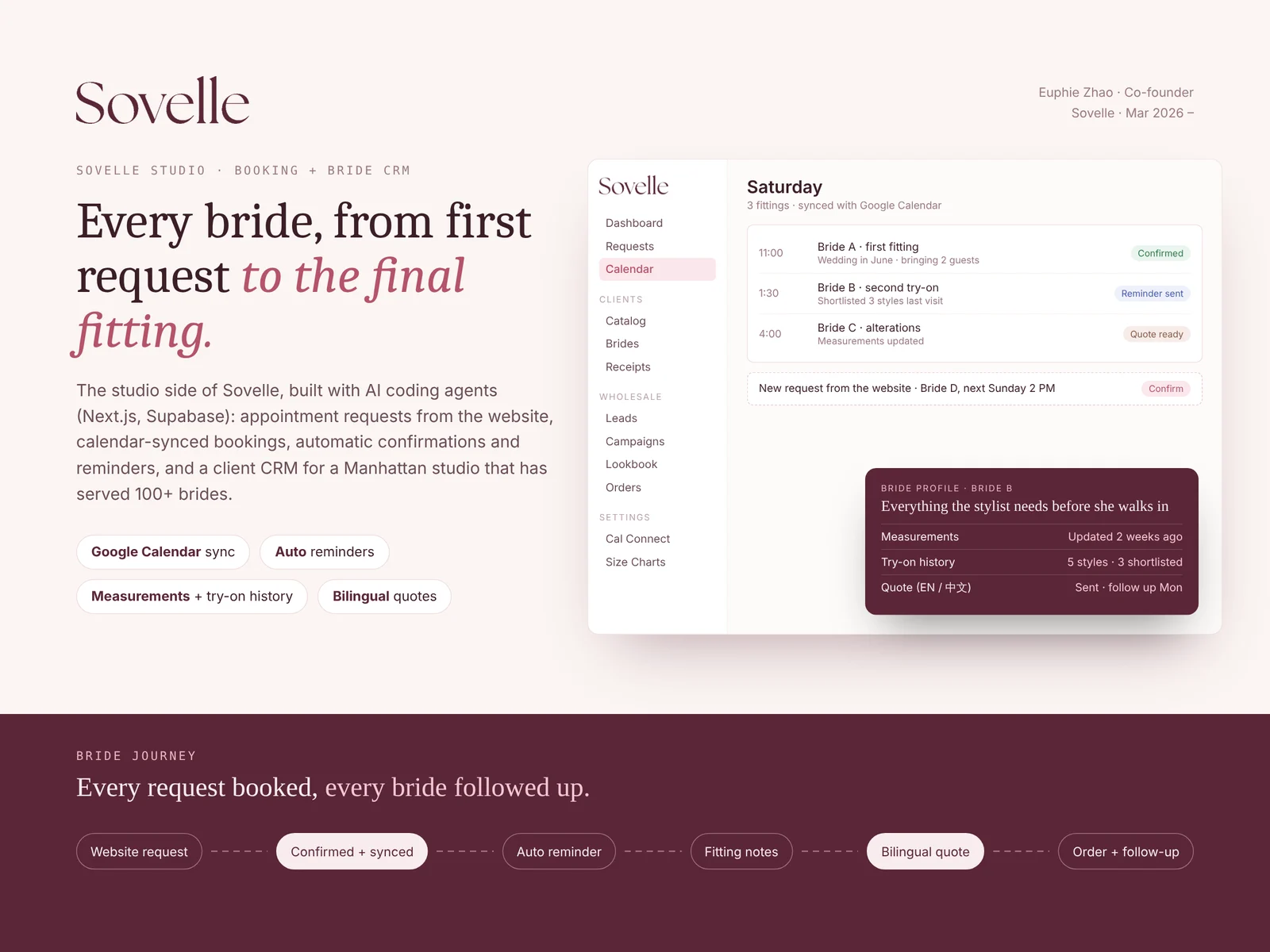
Booking requests flow into an inbox synced both ways with staff calendars. A client record keeps 17 measurements per fitting and the try-on history. Versioned bilingual quotes turn into orders tracked through deposit, production, balance and shipping.
Wholesale
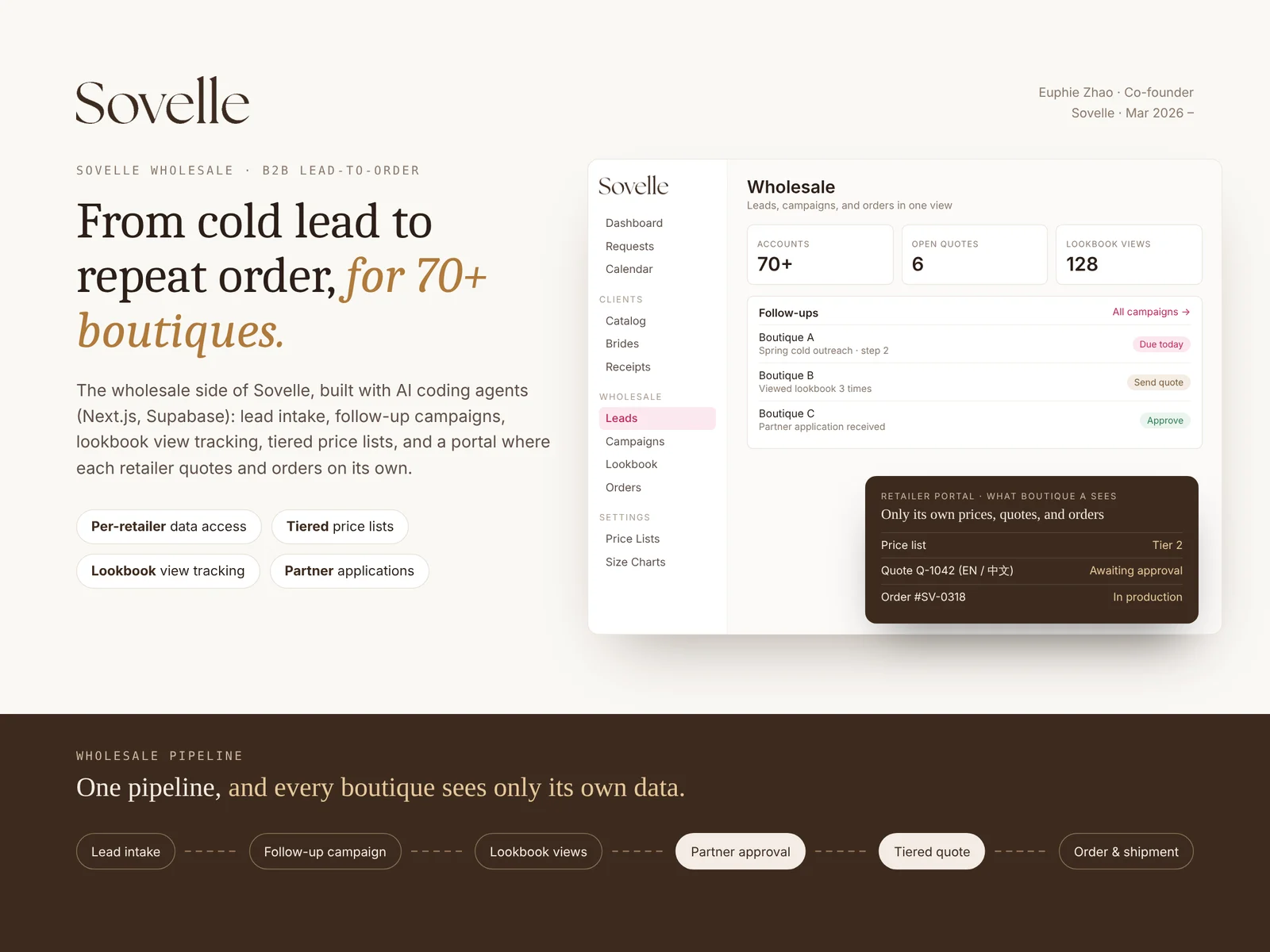
Lookbook requests become leads, leads get follow-up campaigns, and every shared lookbook reports which pages a boutique actually read. Signed boutiques get a portal with their own price tier, quotes and orders.
Online store
A Shopify store for veils, launched separately for brides who buy direct.
Key decisions
Code for B2B, Shopify for DTC
The wholesale and studio workflow is unusual enough to deserve its own system. Selling veils online is not, so that runs on Shopify.
No inventory software
We sell made-to-order, so demand arrives as paid orders. Forecasting tools would have nothing to optimize. The store launched on Shopify Basic alone.
Trust in the data model
Each boutique sees only its own data, enforced in the database. Measurements are append-only and snapshotted into each order. Cost prices are visible to admins only, and every change is logged.
Outcome
Sovelle Studio serves boutiques across North America and brides in New York. The online store is new and still early.
What I’d change
Building fast left some debt: two booking tables that could drift apart, and a fuzzy line between quotes and orders. I wrote them down in a codebase audit and fixed them in phases instead of letting them pile up.